The secret behind China’s EV boom? Local alliances, not industrial policy: study
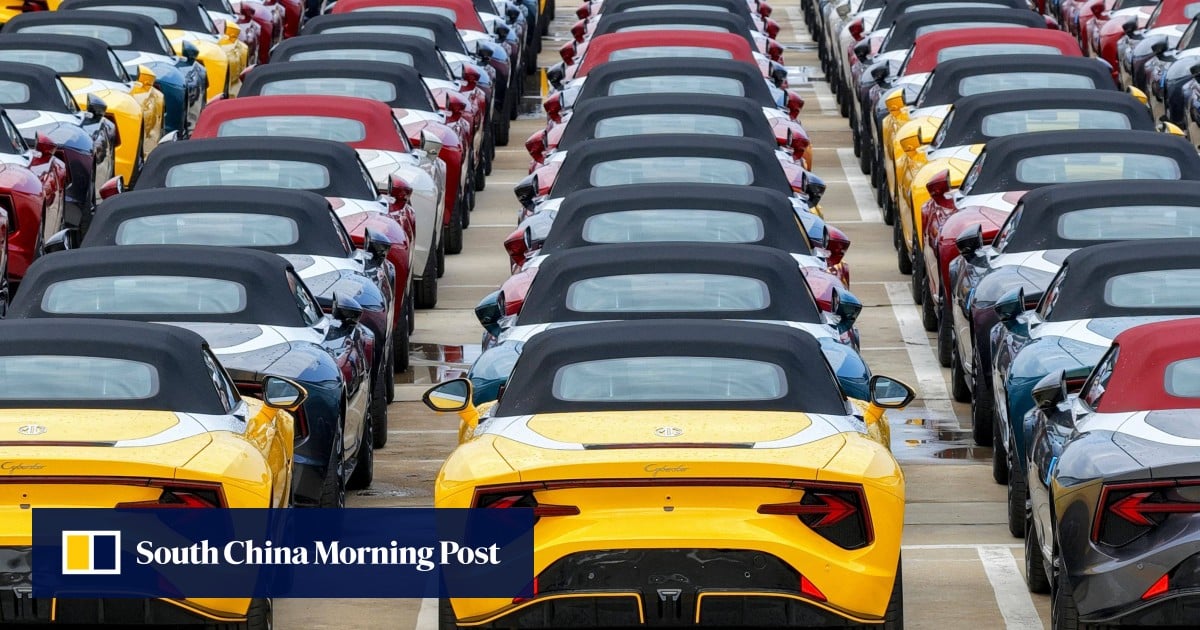
A new study by scholars from Peking University and the Australian National University suggests that local government partnerships, rather than central industrial policy, drove the rapid expansion of China's electric vehicle sector. The research highlights how private manufacturers like BYD, Geely, and Nio successfully navigated a regulatory environment that originally favored state-owned enterprises through strategic alliances with provincial authorities. These findings challenge the prevailing narrative in the European Union regarding Chinese state subsidies and come at a critical time as trade tensions between Beijing and Brussels escalate over EV exports.
The study, authored by Lu Fengming of the Australian National University and Ma Xiao of Peking University, argues that Beijing’s central industrial policies and subsidies played a limited role in the success of private EV makers. In fact, the researchers found that central government intervention initially constrained private players by steering research grants and subsidized loans toward state-owned enterprises (SOEs) during the 10th and 11th five-year plans. Despite this bias, private firms managed to outcompete both SOEs and foreign rivals by forming durable alliances with local governments that leveraged capital markets and navigated policy loopholes to foster innovation and market reach.
Specific historical examples illustrate how local dynamism bypassed central restrictions, such as Geely’s rise in Zhejiang province. Geely began producing sedans in 1999 without a central government license, supported by provincial authorities until formal approval was eventually secured. Later, when Geely sought to acquire Volvo for over $1 billion in 2010, major policy banks denied financing, prompting a coalition of local entities—including the China Construction Bank’s Zhejiang branch and the governments of Chengdu, Daqing, and Shanghai’s Jiading district—to step in with the necessary funds.
More recent interventions continue this trend of local equity investment driving the sector's growth. The study cites Hefei’s 2020 rescue investment in Nio as a turning point after SOEs were slow to adapt to technological shifts. Similar moves include Guangdong province taking a 2 billion yuan ($294.3 million) stake in Xpeng and Ningbo investing 10 billion yuan in Zeekr, Geely’s premium EV brand. These localized partnerships have allowed private manufacturers to thrive in a tightly regulated industry, raising questions for EU regulators who are currently considering trade-defense tools and tariffs against Chinese EV exports based on claims of central state-led distortion.
Summary generated by RabbitReport AI from public reporting. The full article and original reporting belong to South China Morning Post.