NVIDIA Introduces New Jetson Thor Computers to Advance Mainstream Robotics and Edge AI
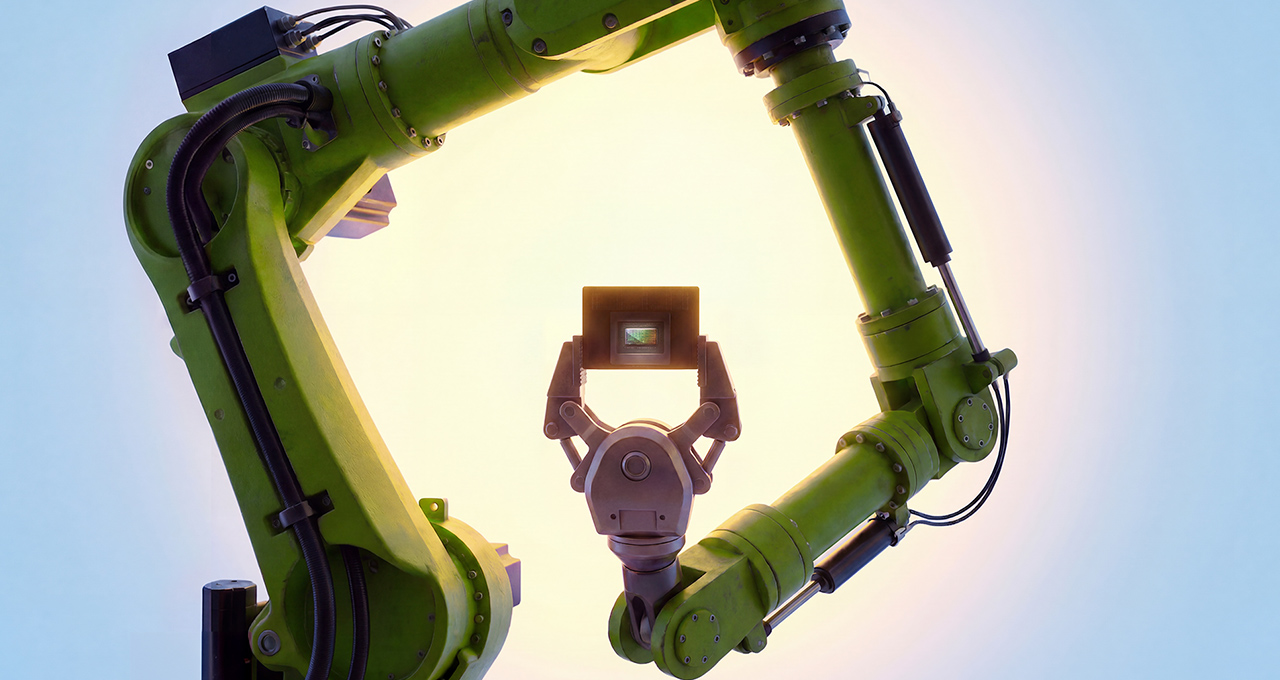
NVIDIA has expanded its edge computing portfolio with the introduction of the T3000 and T2000 modules based on the Thor architecture, designed to power mass-market robotics and humanoid systems. These new modules leverage NVIDIA’s Blackwell GPU and Neoverse Arm CPUs to deliver high-performance AI compute in compact, power-efficient form factors suitable for edge deployment. The announcement is significant for the edge sector as it provides a scalable hardware foundation for running complex foundation models and autonomous agents directly on devices.
The new Jetson and IGX T3000 modules deliver 865 FP4 teraflops of AI compute, offering a compact solution that is roughly half the size and power of the existing T5000 while maintaining similar inference performance for multimodal workloads. The T3000 hardware suite features an NVIDIA Blackwell GPU, an eight-core Neoverse Arm CPU, 32GB of LPDDR5X memory, and 273GB/s of memory bandwidth. For safety-critical environments where robots operate alongside humans, the IGX T3000 variant integrates functional safety features and runs the NVIDIA Halos for Robotics safety system. Additionally, the T2000 module provides a more accessible entry point with 400 FP4 teraflops and 16GB of memory for visual AI agents and industrial manipulators.
To support these hardware advancements, NVIDIA released Jetson agent skills and the Cosmos 3 Edge foundation model, a 4-billion-parameter model optimized for on-device inference and real-time vision analysis. These software tools allow developers to automate memory optimization and system configuration, significantly reducing the time required to deploy complex AI stacks. Real-world applications have already shown substantial efficiency gains; for example, humanoid robotics firms UBTech and Agile Robots reduced memory usage by up to 15GB, while transportation firm NoTraffic achieved a 30% memory reduction on existing Jetson hardware. These optimizations enable developers to run more capable workloads on lower-memory configurations, effectively lowering overall system costs.
The Thor platform has seen rapid adoption from industry leaders such as Amazon Robotics, Boston Dynamics, and FANUC, as well as a broad ecosystem of hardware partners including ADLINK, Advantech, and AAEON. NVIDIA now offers a scalable edge AI platform ranging from 70 TOPS to 2,000 teraflops, addressing a wide spectrum of edge AI workloads from smart retail to intelligent transportation. While the Jetson T3000 and T2000 modules are scheduled for general availability in Q1 2027, developers can begin building immediately using the Jetson AGX Thor developer kit. Emulation modes for the T3000 will be available later this month via JetPack 7.2.1, allowing the industry to begin transitioning toward next-generation embodied AI and autonomous machines.
Summary generated by RabbitReport AI from public reporting. The full article and original reporting belong to NVIDIA Blog.