1,5-Hexadiene Market Size to Hit USD 317.00 Million by 2035
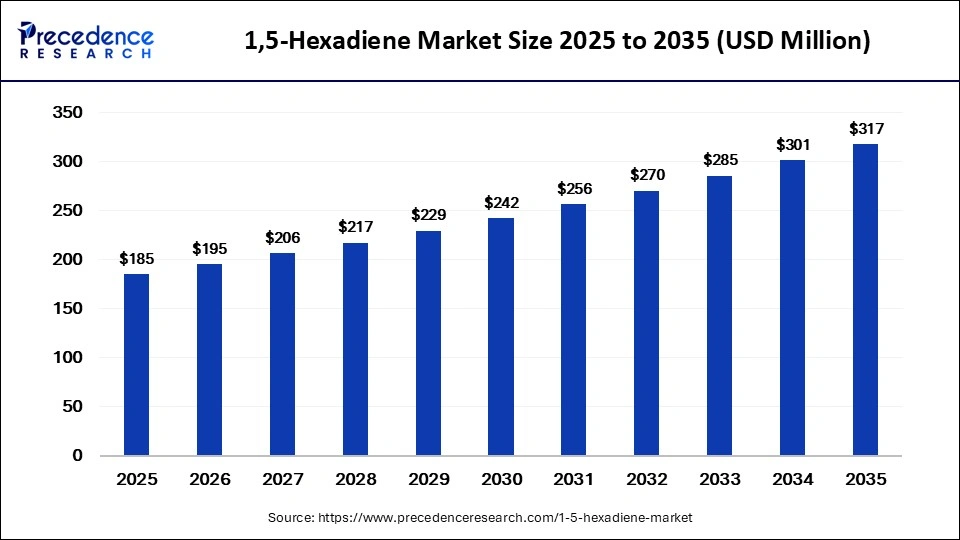
The global 1,5-hexadiene market is projected to grow from a valuation of $185 million in 2025 to approximately $317 million by 2035, representing a compound annual growth rate of 5.80%. This specialized niche within the chemical sector is expanding due to the rising demand for high-performance elastomers and synthetic rubbers across the automotive, construction, and manufacturing industries. As a critical monomer and crosslinking agent, 1,5-hexadiene is increasingly essential for producing durable materials required for modern industrial applications and advanced polymer chemistry.
The 1,5-hexadiene market is characterized by its role in producing high-performance synthetic rubbers, specifically Ethylene Propylene Diene Monomer (EPDM). As an acyclic diene, 1,5-hexadiene is highly valued in Acyclic Diene Metathesis (ADMET) polymerization for creating rubbers with superior heat resistance, durability, and weathering capabilities. The automotive sector's transition toward electric vehicles is a major catalyst for this demand, as manufacturers require lightweight polymers and durable elastomers for seals, hoses, weather stripping, and anti-vibration components to enhance vehicle efficiency.
Market segmentation by purity reveals that the 95%-98% grade dominated the industry in 2025 with a 47% share, valued at $87 million, primarily due to its use in ensuring controlled microstructures during polymer synthesis. However, the above 98% purity segment is expected to see the fastest growth, with a 7% CAGR reaching $127 million by 2035, driven by its use in pharmaceuticals, advanced polyolefins, and biodegradable plastics. The below 95% segment remains a cost-effective option for industrial solvents and bulk chemical reactions, holding an 18% market share in 2025. In terms of application, specialty chemicals led the market with a 33% share, while pharmaceutical intermediates are projected to be the fastest-growing application segment at a 6.8% CAGR.
Technological integration, particularly artificial intelligence, is significantly impacting production efficiency and R&D within the sector. AI-powered predictive analytics allow manufacturers to optimize reaction conditions and reduce material waste, while also streamlining supply chain management and demand forecasting. Despite these advancements, the industry faces challenges such as the instability of petrochemical feedstock prices, which are tied to crude oil fluctuations. Furthermore, the high volatility and flammability of 1,5-hexadiene require manufacturers to navigate stringent environmental and safety regulations regarding production and storage, which can impact overall operational costs.
Summary generated by RabbitReport AI from public reporting. The full article and original reporting belong to Precedence Research.