The New Playbook for Enterprise AI Contracts
Enterprise AI adoption is rapidly expanding, yet organizations face significant hurdles in pricing, budgeting, and negotiating sustainable contracts as the technology evolves. Recent data from the U.S. Government Accountability Office highlights a growing gap between AI spending and outcomes, driven by a shift toward open-ended as-a-service commitments and high vendor concentration. This trend necessitates a new strategic approach to AI procurement that prioritizes flexibility and data-driven negotiation to mitigate the risks of structural lock-in and unpredictable costs.
The U.S. Government Accountability Office (GAO) reported a surge in AI utilization, with federal agencies more than doubling their use of the technology between 2023 and 2024. Despite this growth, officials identified the difficulty of determining pricing and the overall cost of adoption as a primary acquisition challenge. The shift toward AI as a service models has replaced traditional fixed-price products with open-ended financial commitments, often leading to structural vendor lock-in. This lock-in is frequently caused by the prohibitive cost of re-architecting systems around competitors rather than restrictive contract clauses. Furthermore, a GAO audit revealed that 10 vendors control approximately 73% of widely used federal software licenses, with Microsoft alone accounting for over 31% of total spend, significantly weakening the buyer's negotiating leverage.
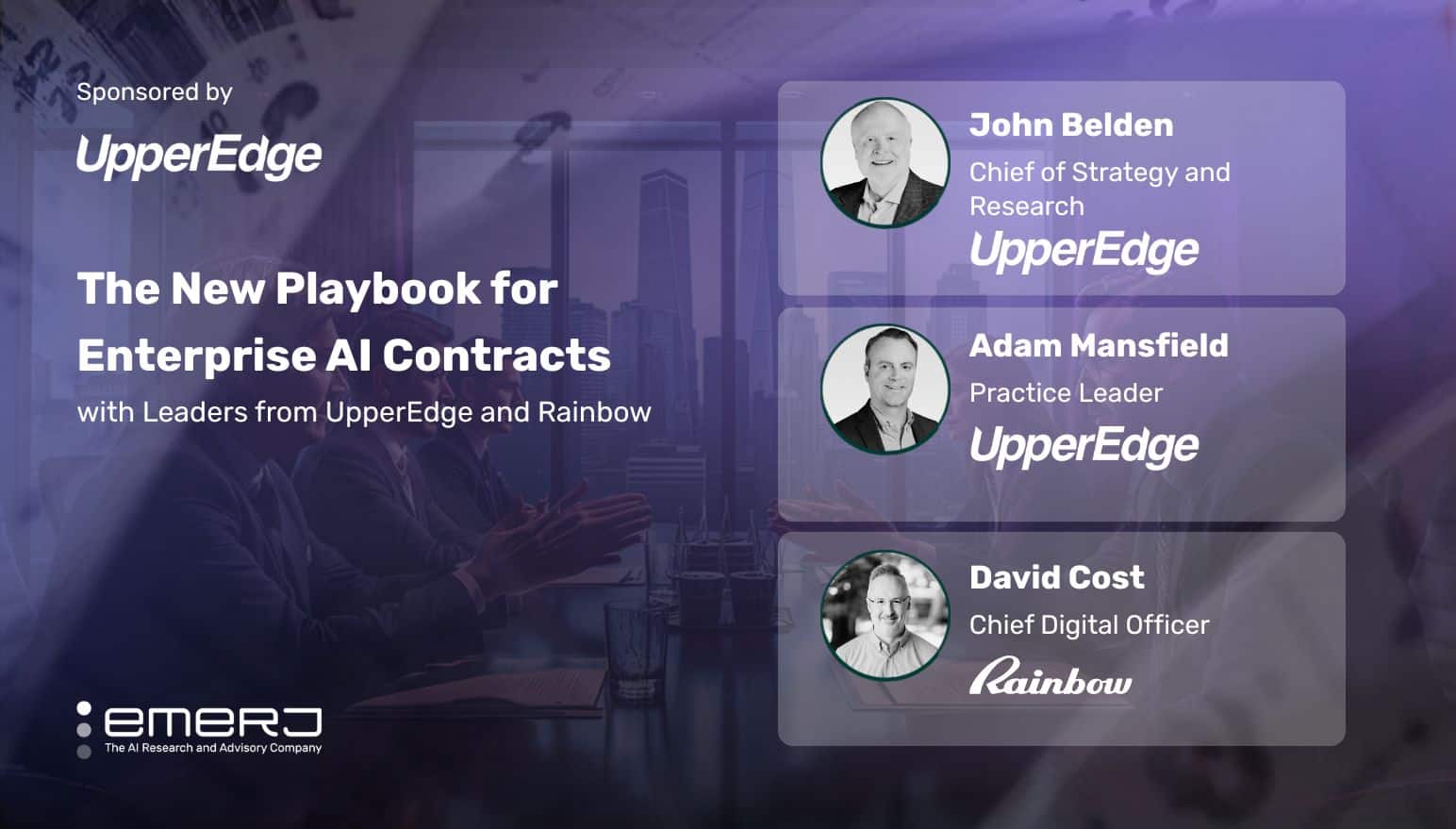
The scale of AI investment is accelerating at rates that outpace traditional multi-year contract terms, with Brookings tracking federal AI contract categories growing from $311 million to $1.9 billion and $5 million to $2.2 billion within just two years. To address this volatility, John Belden, Chief of Strategy and Research at UpperEdge, advocates for a reversibility framework in enterprise transformation. Belden argues that major decisions must be engineered with defined triggers, pivot paths, and understood cost profiles to allow organizations to change direction as reality shifts. This structural design choice is intended to prevent leaders from surrendering to uncertainty during long-range planning that is inherently unstable due to platform maturity and pricing volatility.
Adam Mansfield, Practice Leader at UpperEdge, emphasizes that strategic reversibility is only possible if supported by specific commercial structures, such as short contract terms, renegotiation triggers, and pricing tied to observable outcomes. As AI shifts enterprise pricing toward volatile, consumption-driven models, Mansfield suggests that executives must anchor negotiations in hard usage and value data rather than relying on vendor projections. David Cost, Chief Digital Officer at Rainbow Apparel, supports this by treating AI initiatives as controlled experiments with defined exit ramps and rapid evaluation cycles. By implementing kill switches and alternative vendor paths, businesses can maintain agility and avoid being locked into a single AI approach or unfavorable commercial structure.
Summary generated by RabbitReport AI from public reporting. The full article and original reporting belong to Emerj Artificial Intelligence Research.