3D-Printed Contact Lenses Made in Just 20 Minutes
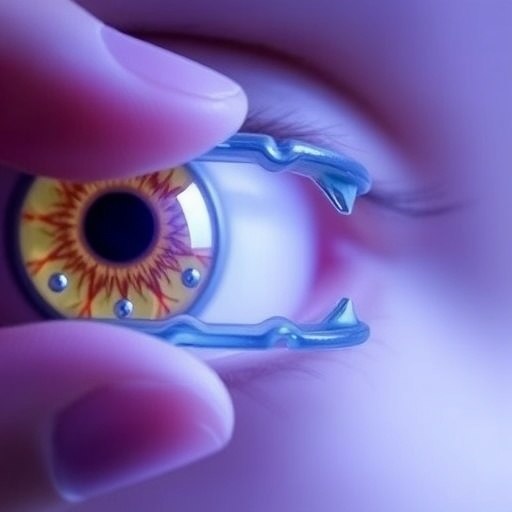
Researchers at the University of Waterloo have developed a digital fabrication platform capable of producing patient-specific hard contact lenses in under 20 minutes using vat photopolymerization. By combining custom lens design software with a novel hydrophilic silicone material, the team has addressed traditional manufacturing limitations regarding ocular topography and material biocompatibility. This advancement represents a significant shift for the additive manufacturing sector into personalized medical devices, potentially streamlining the optometric fitting process into a single visit.
The University of Waterloo research team, in collaboration with the Centre for Vision and Eye Research, has pioneered a method to create customized rigid contact lenses that conform to an individual's unique corneal geometry. Utilizing a newly formulated silicone material optimized for high-resolution 3D printing, the process overcomes the historical difficulty of using silicones in additive manufacturing, which typically requires specific photopolymerizable properties. This breakthrough allows for the production of lenses that maintain essential optical transparency, mechanical robustness, and oxygen permeability while being manufactured in a fraction of the time required by traditional methods.
To ensure the visual clarity and comfort of the printed lenses, the researchers implemented a specialized ultra-thin non-contact fluidization coating technique. This step is critical for mitigating the “stair-step” effect—microscopic surface irregularities common in layer-by-layer 3D printing—without compromising the lens's customized shape or optical performance. The integrated digital platform uses software to map the patient’s ocular surface, engineering the inner surface for a perfect fit and the outer surface for precise vision correction, effectively eliminating the need for multiple fittings over several weeks.
The project has already garnered international recognition, including a Gold Medal at the 2026 Shanghai International Exhibition of Inventions, and the team has secured a provisional patent for their hydrophilic silicone material. While preliminary laboratory testing has confirmed the biocompatibility of the 3D-printed lenses, the researchers are now preparing for in vivo studies to further validate safety and efficacy for clinical use. This development highlights the growing convergence of advanced materials science and precision additive manufacturing in the healthcare sector, offering a scalable model for the rapid production of highly personalized medical wearables.
Summary generated by RabbitReport AI from public reporting. The full article and original reporting belong to Bioengineer.org.