Global Asset Management Market Projected to Reach $1.12 Trillion by 2034 Amid AI Integration and Alternative Asset Growth
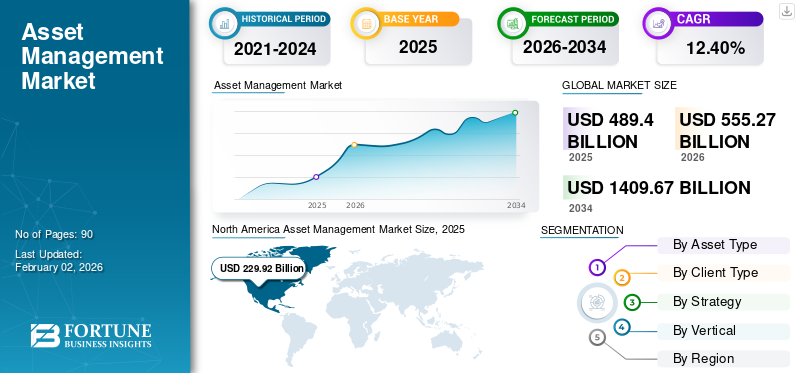
The global asset management market is forecast to grow at a compound annual growth rate of 12.6%, rising from a 2025 valuation of $432.77 billion to more than $1.12 trillion by 2034. This expansion is driven by the accumulation of retirement savings, the adoption of digital wealth platforms, and an increasing demand for diverse investment solutions among both institutional and retail clients. For the wealth management sector, these figures underscore a shift toward technology-enhanced portfolio construction and a broader embrace of alternative asset classes to navigate market volatility.
The global asset management industry is currently dominated by North America, which held a 47% market share in 2025 with a valuation of $229.92 billion. Leading firms such as BlackRock, Inc., Fidelity Investments, and J.P. Morgan Asset Management are driving the market forward by managing vast portfolios across equities, bonds, and real estate. Growth is further bolstered by institutional investors—including pension funds, sovereign wealth funds, and insurance companies—who are increasingly seeking professional management to achieve diversified exposure and long-term capital preservation for aging populations.
Technology is acting as a primary catalyst for change, particularly through the implementation of generative AI and partnerships with fintech startups. These advancements allow firms to analyze unstructured data, such as news stories and social media sentiment, to provide more informed, predictive decision-making and tailored investment strategies. Furthermore, the integration of robo-advisory platforms and automated compliance tools is helping traditional asset managers improve operational efficiency, reduce costs, and deliver the seamless digital experiences now expected by modern investors.
The market is also witnessing a structural shift toward passive investment vehicles like ETFs and index funds, alongside a significant expansion into alternative assets such as private equity, infrastructure, and hedge funds. Institutional and retail clients are moving toward outcome-based investment frameworks that prioritize risk management and portfolio diversification. As macroeconomic variables like interest rate cycles and inflation continue to influence capital markets, asset managers are focusing on asset allocation expertise and investment research as key competitive differentiators to meet sophisticated investor expectations.
Summary generated by RabbitReport AI from public reporting. The full article and original reporting belong to Fortune Business Insights.