For the First Time, a Cell Built From Scratch Grows and Divides
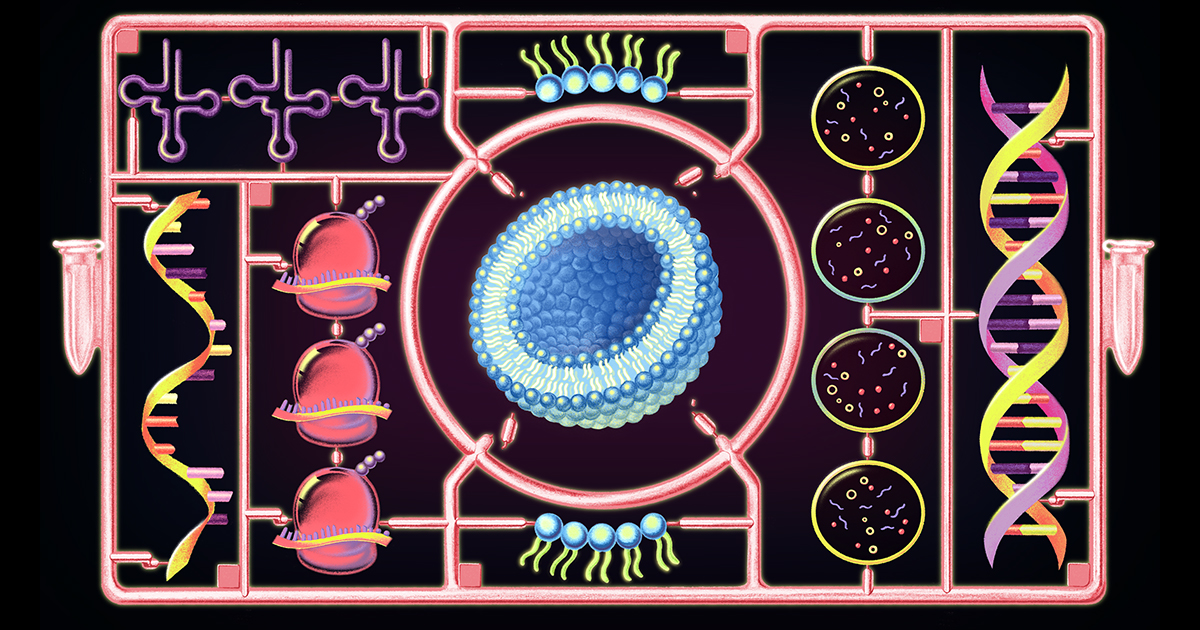
Researchers led by Kate Adamala at the University of Minnesota have successfully assembled a synthetic cell from nonliving biological components that can grow, replicate its DNA, and undergo division. This milestone represents a significant advancement in the synthetic biology sector's long-standing goal of engineering life-like systems from the ground up using a defined chemical blueprint. While the synthetic cell is not yet fully autonomous, its ability to execute a basic cell cycle provides a new platform for studying the origins of life and developing novel biomanufacturing applications.
The research team achieved this breakthrough by packing molecular components into liposomes—hollow sacs enclosed by a lipid membrane—to serve as the cellular body. To facilitate the cell cycle, the team integrated a DNA replication system alongside a commercial suite of 36 enzymes designed to transcribe DNA and synthesize proteins. Because the synthetic genome lacks metabolic genes, the researchers developed a novel delivery method where the cell fuses with external lipid bubbles containing essential supplies like sugar, lipids, transfer RNA, and ribosomes.
Industry experts, including Jack Szostak of the University of Chicago and Sijbren Otto of the Stratingh Institute, have characterized the achievement as an "impressive step" toward the "holy grail" of creating life from non-living matter. Unlike previous "top-down" approaches that strip genomes from existing bacteria, this "bottom-up" method allows for total control over every chemical ingredient. This level of precision enables scientists to switch components in and out, offering a flexible blueprint for future synthetic organisms that could eventually produce biofuels and drugs.
Despite the success in growth and division, the synthetic cell remains dependent on human intervention and constant nutrient deliveries, lacking its own waste removal and defense mechanisms. However, the implications for the synthetic biology market are substantial, as these customizable cells provide a controlled environment to investigate fundamental biological questions, such as the minimum requirements for life and the mechanisms of abiogenesis. The study, which was posted on the preprint site biorxiv.org on July 2, 2026, demonstrates that it is possible to generate life-like behavior from a specific list of nonliving ingredients.
Summary generated by RabbitReport AI from public reporting. The full article and original reporting belong to Quanta Magazine.