China leads in GPS-style, reconnaissance and anti-satellite abilities, US report says
A report from the Washington-based Information Technology and Innovation Foundation (ITIF) warns that China has surpassed the United States in key space technology sectors, including satellite navigation, remote sensing, and anti-satellite capabilities. While the U.S. maintains a lead in reusable launch vehicles and low-Earth orbit broadband, China’s state-backed commercial sector is rapidly narrowing the innovation gap. This shift carries significant implications for the global space economy, which analysts project will exceed $1 trillion in value over the next decade.
The ITIF report highlights that China has leapfrogged the U.S. in positioning, navigation, and timing (PNT) via its BeiDou system, which now boasts superior constellation scale and international coverage compared to GPS. In the remote sensing sector, China’s Gaofen Earth-observation satellites and commercial Jilin-1 constellations have established one of the world’s most robust satellite imaging ecosystems. These advancements are attributed to a 'whole-of-society' approach and military-civil fusion policies that accelerate technology transfer between state-owned enterprises and a growing private sector.
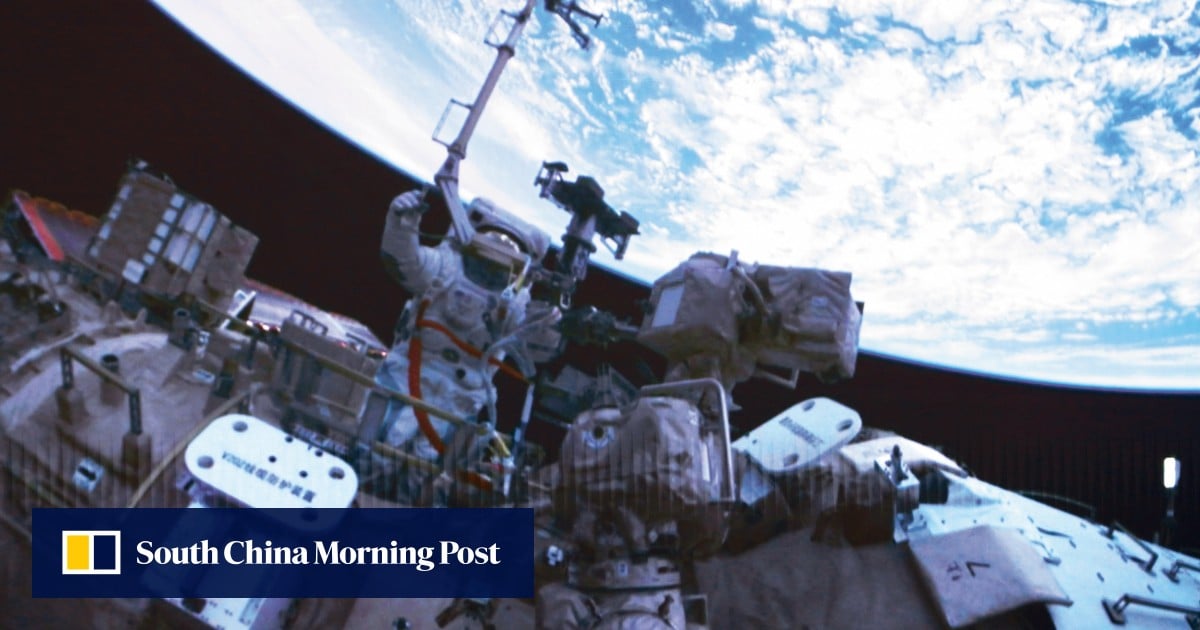
China is also identified as a leader in counterspace technologies, investing heavily in kinetic interceptors, electronic warfare, and directed-energy systems designed to disable adversary satellites. Analyst Ellis Scherer noted that China is developing satellites capable of 'dogfighting' maneuvers in orbit to potentially attack other nations' assets. While the U.S. still holds an edge in space station experience via the International Space Station, China’s Tiangong station has rapidly reached a level of capability that the report describes as broadly comparable to American efforts.
Reusable launch vehicles remain the primary area where the United States maintains a decisive technological lead, driven by SpaceX’s Falcon 9 and its impact on launch economics. Although Chinese firms such as LandSpace, CAS Space, and Space Epoch are working on similar technologies, the lack of operationally proven reusable rockets remains the biggest weakness in Beijing’s commercial space strategy. The report concludes that the U.S. must enhance its domestic launch capacity and strengthen the partnership between NASA and private industry to prevent China from claiming the top spot in the global space economy.
Summary generated by RabbitReport AI from public reporting. The full article and original reporting belong to South China Morning Post.