Divergent urban pathways to autonomous mobility across thirty Chinese cities
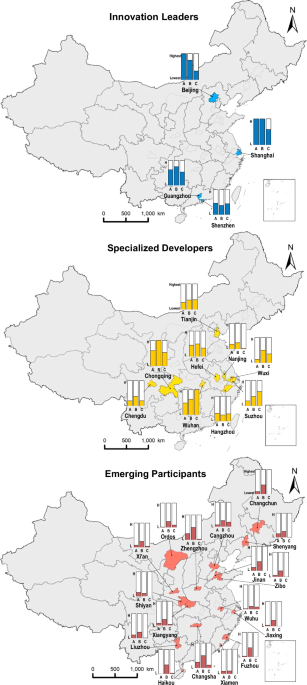
A comprehensive study of 30 pilot cities in China reveals three distinct archetypes for autonomous vehicle (AV) development: Innovation Leaders, Specialized Developers, and Emerging Participants. By analyzing 116 pilot projects and 881 policy documents, the research demonstrates how municipal governments utilize diverse innovation mechanisms to transition toward intelligent connected vehicle (ICV) ecosystems. This analysis is vital for the Smart Cities & Urban Tech sector as it illustrates how local priorities and policy mixes shape the global trajectory of self-driving technology and urban infrastructure.
China has rapidly emerged as a global leader in autonomous mobility, with 32,000 kilometers of roads authorized for vehicle testing and 16,000 licenses issued to over 70 companies by mid-2024. The nation’s progress is driven by state-led planning, including the “Made in China 2025” plan and the 2020 “Strategy for Innovation and Development of Intelligent Vehicles,” which sets aggressive commercialization targets for 2025. Central to this approach is the Intelligent Connected Vehicles (ICV) strategy, which promotes a “vehicle-road-cloud” paradigm. This model positions municipal governments as central actors in infrastructure provision, contrasting with the firm-driven autonomy models prevalent in Western markets.
The study identifies three city archetypes that reflect different value-chain positions and innovation capacities. Innovation Leaders, typically global hubs like Beijing and Shanghai, pursue end-use-focused innovation through forward-looking institutional arrangements that facilitate market formation. Specialized Developers and Emerging Participants, including smaller manufacturing centers like Liuzhou and Shiyan, tend to focus more on industrial manufacturing and the development of physical infrastructure. This heterogeneity suggests that urban AV adoption is not a uniform process but a context-dependent transition shaped by a city's specific socio-economic conditions and existing industrial goals.
These urban experimentation sites serve as critical hubs for the Smart Cities & Urban Tech sector, allowing for the validation of disruptive technologies under real-world conditions. By testing diverse use cases, these cities generate massive volumes of data necessary to train autonomous-driving systems while mobilizing significant investment in AV-related sectors. The research highlights that accelerating socio-technical transitions requires systemic changes across regulatory frameworks, business models, and traffic patterns. Ultimately, the study reveals multiple pathways for building AV innovation systems, showing how municipal governments can dynamically combine different mechanisms to address social and environmental issues at scale.
Summary generated by RabbitReport AI from public reporting. The full article and original reporting belong to Nature.