UBTech Unveils Cruzr Y1 Logistics Humanoid Robot
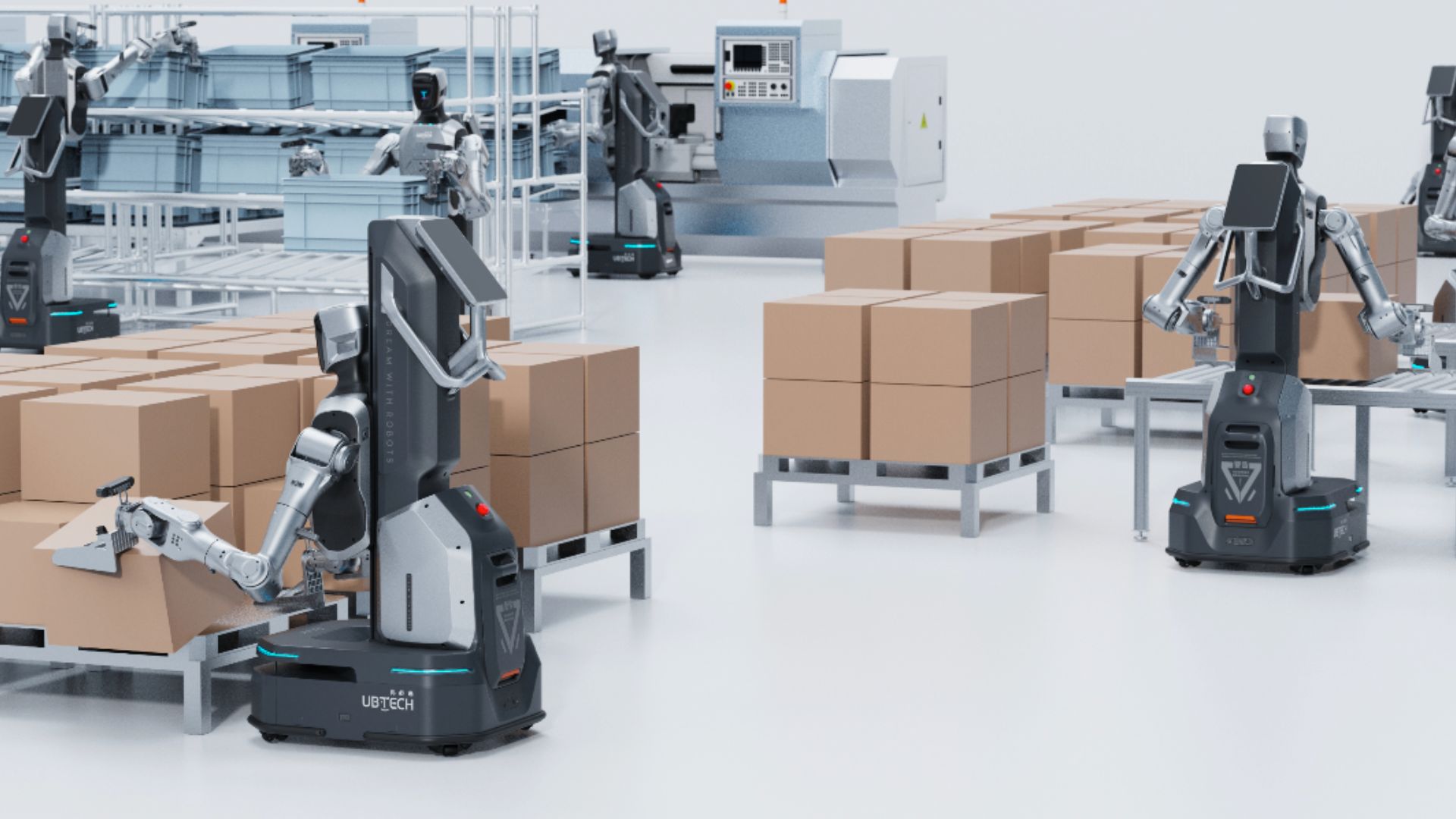
UBTech Robotics has introduced the Cruzr Y1, a wheeled humanoid robot designed to automate box handling, palletizing, and sorting in industrial settings. The robot utilizes 3D vision and embodied intelligence to navigate and operate within dynamic, disordered warehouse environments. This launch provides logistics and robotics teams with a new hardware option for addressing the last-meter handling problem that traditional fixed automation often struggles to solve.
UBTech Robotics has globally debuted the Cruzr Y1, a wheeled humanoid robot specifically engineered to automate manual logistics tasks including box loading, unloading, and sorting. By employing a wheeled mobile base instead of bipedal legs, the design emphasizes stability and energy efficiency on factory floors while maintaining the manipulation capabilities of a humanoid form. The robot integrates 3D vision and embodied intelligence decision-making, allowing it to autonomously recognize and adapt to unstructured environments where box sizes and pallet configurations may vary.
To support enterprise deployment, UBTech is offering a full-stack technology ecosystem that includes SDKs, vision recognition APIs, and motion control development interfaces. The system is further supported by a multi-machine scheduling platform designed to integrate seamlessly with existing factory manufacturing infrastructure. This openness is intended to allow warehouse engineering teams to customize the robot's performance and coordinate multiple units within a single facility, differentiating it from closed-system competitors.
The release of the Cruzr Y1 comes as UBTech targets a shipping goal of at least 5,000 industrial humanoids across its product lines by 2026. This move places the company in direct competition with other major robotics firms such as Boston Dynamics, Agility Robotics, Unitree, and DEEP Robotics in the logistics automation market. For the broader automation sector, the Cruzr Y1 represents a strategic shift toward flexible, mobile platforms that can replace or augment fixed conveyor systems in complex, high-variability industrial workflows.
Summary generated by RabbitReport AI from public reporting. The full article and original reporting belong to Let's Data Science.