Rice and NASA Launch Open-source Remote Space Robotics Simulator
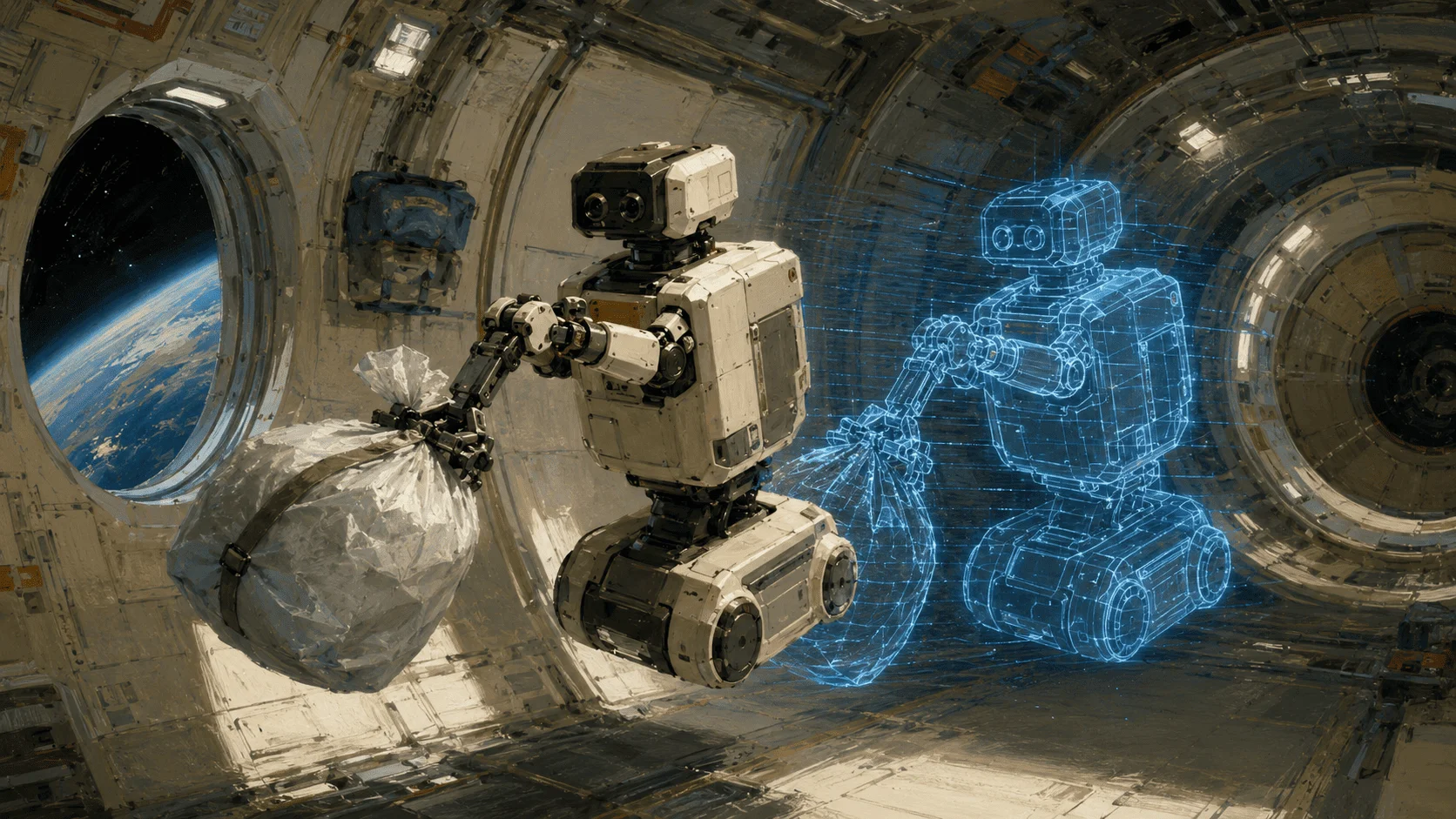
Rice University and NASA Johnson Space Center have released the iMETRO Dynamic Simulation, the first open-source dynamic simulation environment specifically designed for intravehicular space robotics. This digital twin platform allows the global robotics community to develop and validate software for robots intended to operate inside spacecraft and lunar habitats. By providing a high-fidelity virtual testbed, the project aims to accelerate the development of autonomous systems that can handle routine maintenance tasks, ultimately freeing astronauts to focus on scientific exploration.
The iMETRO Dynamic Simulation was unveiled at the 2026 IEEE International Conference on Robotics and Automation in Vienna as a collaborative effort between Rice University and NASA Johnson Space Center. Funded by NASA, the National Science Foundation, and Rice University, the platform serves as a digital twin of NASA’s physical iMETRO facility, which contains full-scale mockups of future space vehicles and lunar habitats. The development team included NASA’s Shaun Azimi, who leads the Dexterous Robotics team, alongside Rice University professor Lydia Kavraki and doctoral student Nikki Hart.
The simulator addresses a critical gap in the robotics sector by providing accessible tools for modeling the unique challenges of space environments, such as low- and zero-gravity conditions. Traditionally, the broader robotics community has lacked open-source environments to test manipulation behaviors for space interiors. By using this virtual testbed, researchers can design and validate robotic software before transitioning to expensive physical hardware, ensuring that robots can effectively navigate the complex layouts of future space stations and habitats.
Practical applications for the simulator focus on automating routine maintenance and cargo management, which currently occupy approximately one-third of an astronaut's time during long-duration missions. During the project's validation phase, the research team demonstrated the platform's efficiency by developing a new application within the simulation and successfully deploying it to NASA’s physical iMETRO facility in less than 24 hours. This capability allows researchers worldwide to remotely test how robotic software integrates with various hardware configurations and operational paradigms at NASA's physical test beds.
Summary generated by RabbitReport AI from public reporting. The full article and original reporting belong to AI Insider.