US Pharmaceutical Excipients Market Size to Hit USD 5.58 Billion by 2035
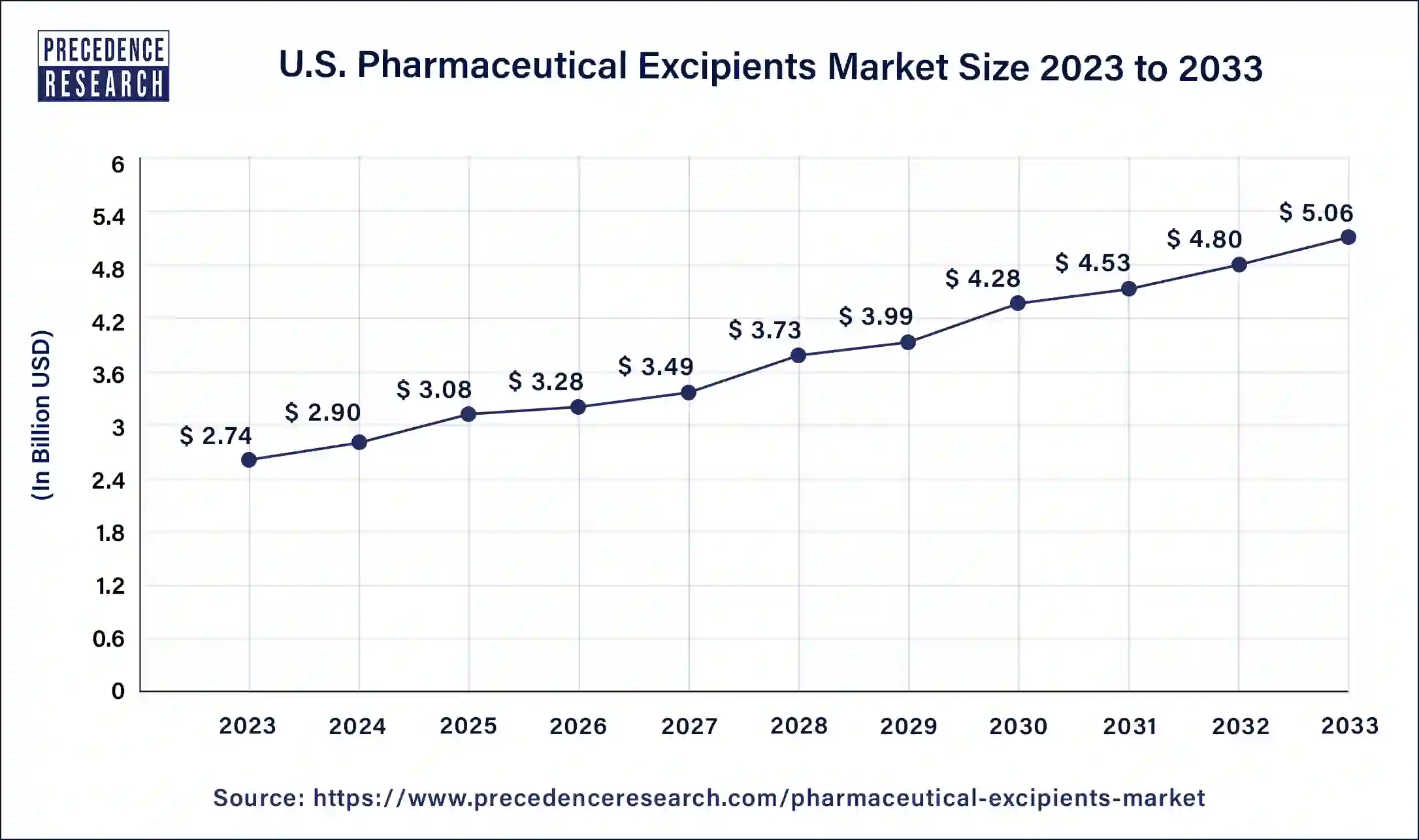
The U.S. pharmaceutical excipients market is projected to reach approximately USD 5.58 billion by 2035, growing at a CAGR of 6.12% from its 2026 valuation of USD 3.28 billion. This growth is fueled by a rising demand for biologics, specialty drugs, and advanced formulations that require high-performance inert ingredients to ensure drug stability and bioavailability. As excipients can constitute up to 90% of a medicine's formulation, their development is vital for the pharmaceutical industry's transition toward more complex and patient-centric delivery systems.
The U.S. pharmaceutical excipients market is undergoing a significant transformation driven by the need for multifunctional ingredients in complex oral and injectable drugs. Artificial intelligence is playing a pivotal role in this evolution, as formulation scientists utilize AI-based models to assess the impact of excipients on a drug's solubility and dissolution rates, thereby reducing laboratory iterations. Additionally, the adoption of continuous pharmaceutical manufacturing is increasing the demand for excipients that provide robust performance and processing efficiency, particularly in high-purity selections.
In 2025, the fillers and diluents segment held a dominant market position due to the critical role of ingredients like lactose, microcrystalline cellulose, and mannitol in maintaining dosage uniformity for solid oral medications. Lactose-based excipients are especially prevalent because of their compressibility and compatibility with both generic and branded drugs. Industry leaders like DFE Pharma and MEGGLE Pharma have expanded their North American operations, with DFE Pharma introducing the EcoLact 2030 initiative in 2026 to offer verified value chain traceability and a 30% reduction in CO2 emissions while maintaining pharmaceutical-grade quality.
The market is also seeing a shift toward advanced coating agents and cellulose-based excipients, which are expected to grow significantly through 2035. These materials are increasingly used to enhance product stability, mask unpleasant tastes, and improve the patient experience for specialty medicines. However, the sector faces challenges such as the high financial and operational costs of meeting stringent regulatory requirements and the risks associated with a dependence on complex global raw material supply chains. Geographically, New Jersey remains a central hub for this market due to its high concentration of pharmaceutical manufacturing and contract development organizations.
Summary generated by RabbitReport AI from public reporting. The full article and original reporting belong to Precedence Research.