3D Printing Medical Devices Market Projected to Reach $18.61 Billion by 2035
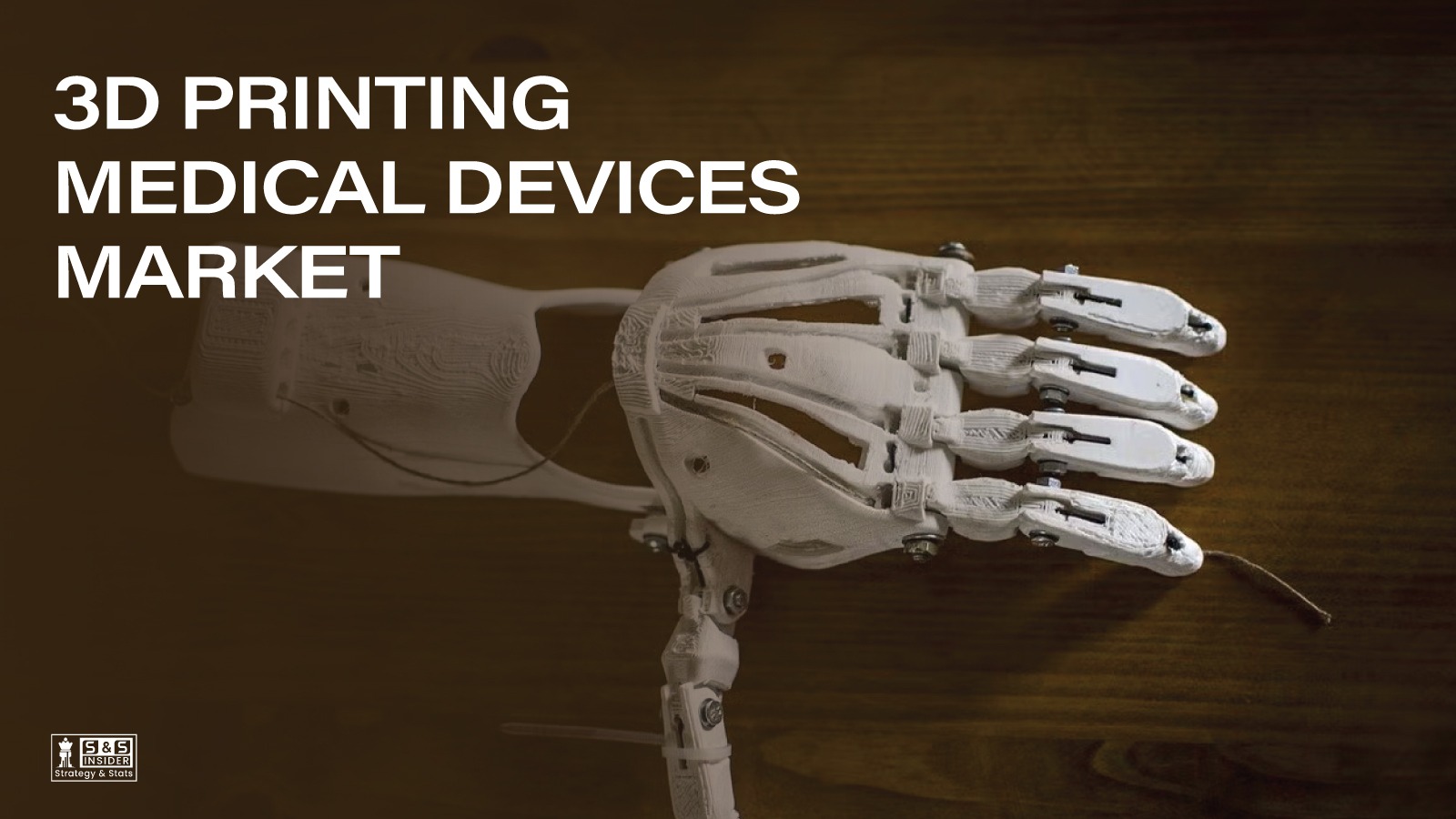
The global 3D printing medical devices market is experiencing rapid growth, driven by the increasing adoption of personalized healthcare solutions and advanced manufacturing technologies. Valued at an estimated $3.71 billion in 2025, the sector is projected to expand to $18.61 billion by 2035, representing a compound annual growth rate of 17.49% during the forecast period. This expansion is fueled by rising demand for patient-specific implants, prosthetics, and surgical guides that improve clinical outcomes while reducing production costs.
The 3D printing medical devices sector is undergoing a transformation led by the integration of selective laser sintering, bioprinting, and AI-powered design software. These technologies enable healthcare providers to implement precision medicine through point-of-care manufacturing and the development of biocompatible raw materials. Key drivers for this growth include a rising incidence of chronic ailments and a shift toward personalized solutions that enhance surgical accuracy and efficiency. The market is also benefiting from increased investment in additive manufacturing and regenerative medicine research.
Major industry players are actively launching new technologies to maintain competitive advantages and expand their global footprint. In February 2025, Stratasys Ltd. introduced a new 3D printing technology with enhanced multi-material capabilities specifically designed for anatomical models and customized surgical guides. Similarly, 3D Systems Corporation announced advancements in workflow automation and imaging technology in August 2024. Meanwhile, Belgium-based Materialise NV expanded its personalized implant services into Asia-Pacific markets, including India and Southeast Asia, in October 2024 to capitalize on emerging healthcare needs in those regions.
Leading companies such as Stratasys, 3D Systems, and Materialise are defining the market through specialized offerings and integrated platforms. Stratasys utilizes PolyJet and FDM technologies for dental applications and surgical planning, while 3D Systems provides a comprehensive platform covering everything from imaging tools to tissue engineering. Other significant contributors to the landscape include medical device giants like Medtronic, Stryker, and Zimmer Biomet, alongside technology firms such as GE Additive, HP Inc., and Carbon Inc., all focusing on increasing the speed and precision of medical device production for individualized patient care.
Summary generated by RabbitReport AI from public reporting. The full article and original reporting belong to SNS Insider.