AI & Logistics: Will a ‘Job Apocalypse’ Hit the Supply Chain?
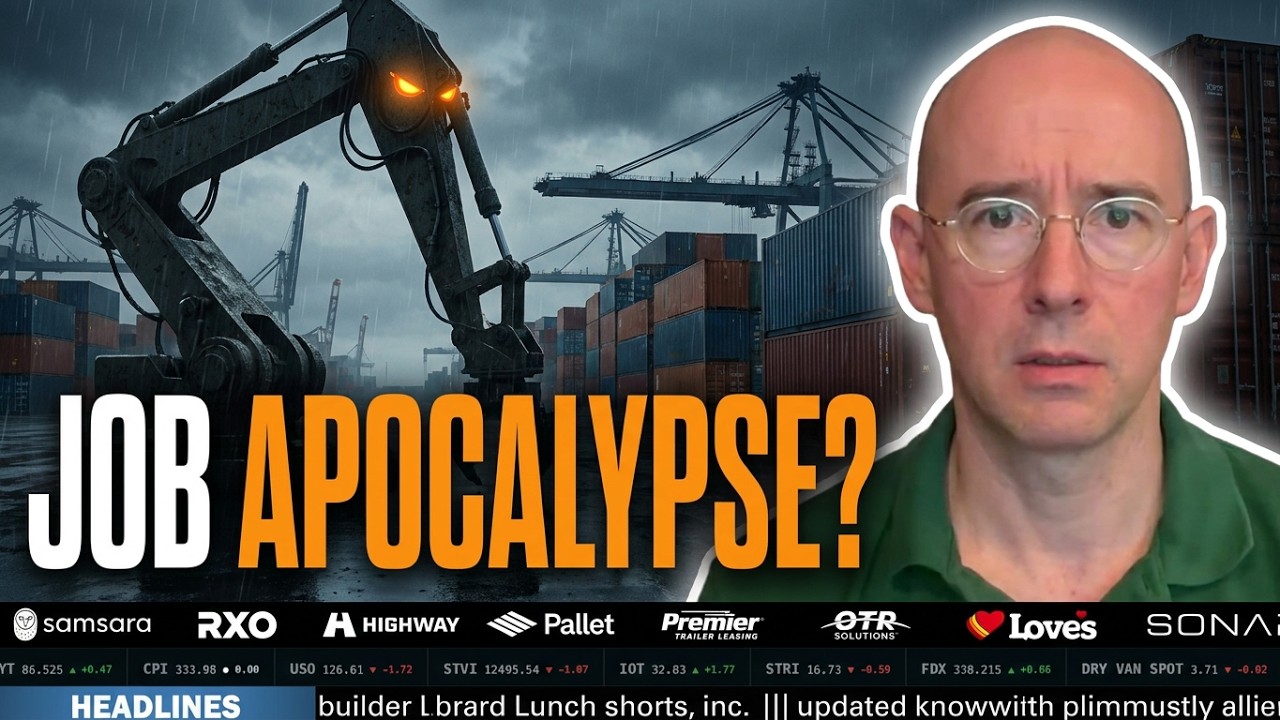
Trimble’s Chief Platform Officer, Jonah McIntire, warns that artificial intelligence is poised to significantly disrupt logistics back-office roles, particularly those centered on digital data entry and processing. This shift is driven by AI's ability to rapidly develop software and automate screen-based tasks, potentially displacing workers in roles that lack creative or directional requirements. For the logistics sector, this evolution highlights a transition toward custom, AI-driven software solutions and the importance of leveraging legacy data assets to maintain a competitive edge.
Jonah McIntire, who oversees product and engineering for Trimble’s transportation segment, predicts a "job apocalypse" for logistics back offices as AI deployment accelerates. He argues that roles where data input and output flow exclusively through screens are prime candidates for elimination or displacement by AI. Despite this outlook, McIntire notes that legacy platforms like Trimble—which touches approximately 65% of U.S. over-the-road capacity—possess a structural advantage over AI-native startups due to their ownership of embedded data, established networks, and distributed hardware. He emphasizes that while AI can automate execution, the remaining human role centers on originating ideas and setting direction, which AI cannot yet perform reliably.
The integration of AI is already reshaping Trimble’s product strategy, exemplified by the launch of a new TMS specifically for small and mid-sized U.S. carriers. By utilizing AI-driven development, the company has shifted to a build-to-order model where creating custom workflows for individual clients is now more cost-effective than requiring them to adapt to standardized code. For instance, McIntire highlighted how specialized features, such as automated refrigeration checks for specific cargo types, can now be developed at a lower price point than traditional systems offered just a few years ago. This shift reflects a broader trend where the unit economics of software development have flipped, making bespoke solutions viable for the downmarket segment.
Beyond product development, AI is facilitating a new approach to M&A and legacy system integration, which McIntire describes as "maximum interoperability with minimum interdependence." This strategy allows Trimble to layer modern user experiences over mainframe systems dating back to the 1960s without forcing customers to undergo complex data migrations. While acknowledging Wall Street's concerns regarding AI's impact on software value, McIntire maintains that established data assets and brand durability remain critical moats that protect incumbent logistics technology providers. He describes the rapid growth of AI-native startups as a potential "sugar high," noting they are vulnerable to the same low barriers to entry that enabled their rise.
Summary generated by RabbitReport AI from public reporting. The full article and original reporting belong to FreightWaves.