Russian Ammonium Nitrate Output Falls After Drone Attacks Disrupt Chemical Plants
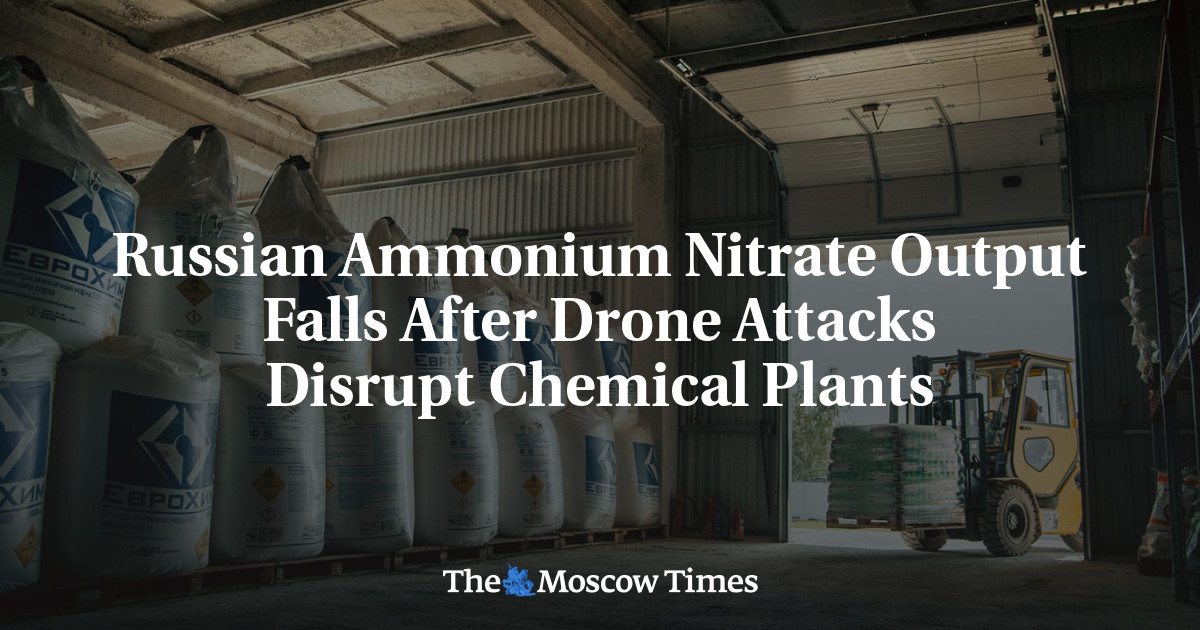
Russia's ammonium nitrate production fell 9% in the first five months of 2026 as Ukrainian drone strikes forced chemical plants into unplanned maintenance. These disruptions hit major producers of nitrogen fertilizers and ammonia, leading to a significant contraction in output for a sector that supplies both global agriculture and the explosives industry. The decline has already prompted temporary export restrictions and is expected to result in a 5% total production drop for the year.
Russian ammonium nitrate production fell to 4.7 million metric tons between January and May 2026, representing a 9% year-on-year decline according to Rosstat data reviewed by the Vedomosti newspaper. The impact was particularly severe in May, which saw a 14% drop in output to 786,100 tons compared to the same month in the previous year. Industry analysts, including Viktor Kutlumbetov of consultancy Implementa, attribute this downturn to reduced production capacity caused by unscheduled repairs following drone strikes on facilities that produce raw materials for both fertilizers and weapons.
The supply chain for nitrogen-based chemicals was further strained as ammonia production, the primary feedstock for ammonium nitrate, fell 7.5% year-on-year to 7.6 million tons during the first five months of the year. In an effort to stabilize the domestic market amidst these shortages, the Russian Agriculture Ministry suspended ammonium nitrate export licenses for a one-month period between March 21 and April 21. Maxim Bratchikov, head of the fertilizer market division at MMI, stated that while demand from farmers remains robust, the market is currently constrained by the limited availability of product resulting from these production disruptions.
Looking ahead, the industry faces a challenging recovery as it is unlikely to fully compensate for the output lost during the spring months despite plants resuming normal operations. MMI forecasts that total ammonium nitrate production for 2026 will decline by approximately 5% to around 11 million tons. This contraction is significant for the global market, as four major entities—Akron, EuroChem, Uralchem, and Azot Group—control roughly 80% of Russia's production and nearly 90% of its exports, making any prolonged disruption a major factor for international chemical supply chains.
Summary generated by RabbitReport AI from public reporting. The full article and original reporting belong to The Moscow Times.