NNSA Unveils Aires Tide, Its First AI-Designed Flight Vehicle Under the Genesis Mission
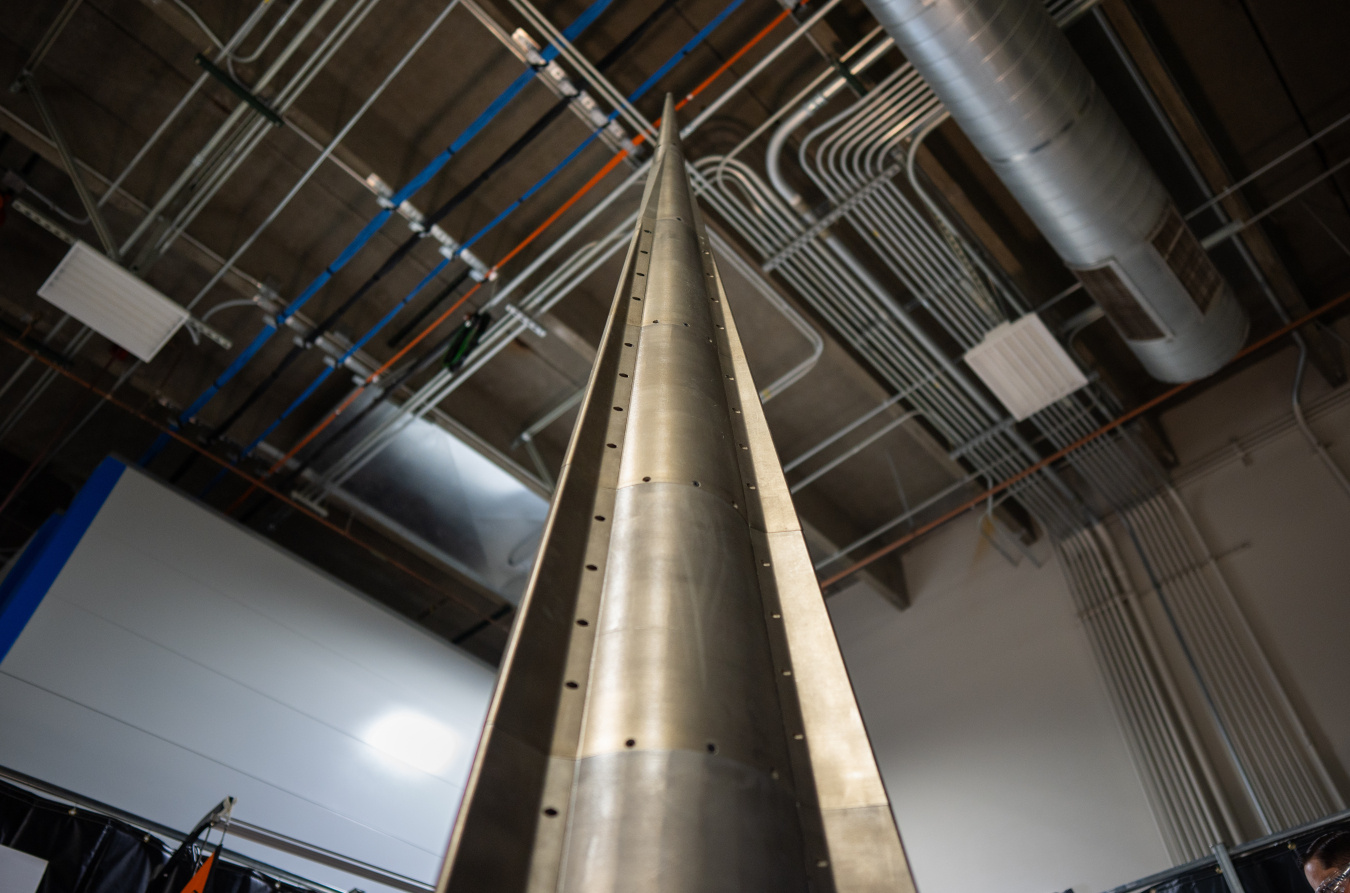
The National Nuclear Security Administration (NNSA) has debuted Aires Tide, a proof-of-concept flight vehicle developed through an integrated pipeline of artificial intelligence, supercomputing, and additive manufacturing. Created under the Genesis Mission, the aircraft demonstrates a significantly accelerated production timeline and reduced manufacturing overhead for national security hardware. This milestone marks a shift toward using AI-driven design and 3D printing as standard tools to rapidly bridge the gap between conceptual blueprints and airborne testing.
The Aires Tide vehicle represents the first tangible output of the Genesis Mission, an initiative established by executive order in November 2025 to network national laboratory supercomputers into a unified AI-driven system. By leveraging this infrastructure alongside additive manufacturing, the NNSA reported that the vehicle was produced at approximately one-fifteenth the cost and one-seventh the time required for conventionally built systems. The project involved a massive cross-agency collaboration between Los Alamos, Lawrence Livermore, and Sandia national laboratories, as well as the Kansas City National Security Campus.
Technical development relied heavily on the Venado and El Capitan supercomputers to move the project from the simulation stage to physical construction. In May, the Nuclear Security Enterprise conducted two successful test drops of the Aires Tide from an altitude of 32,000 feet at the Army’s Dugway Proving Ground in Utah. Data gathered from these flights will be used to refine future iterations, as the NNSA aims to make the combination of high-performance computing and 3D printing a standard practice for responding to urgent mission demands without the delays of traditional production cycles.
NNSA Administrator Brandon Williams emphasized that the project serves as a demonstration of how emerging technologies can strengthen national security while maintaining human oversight. This strategy aligns with broader defense sector trends, such as the Missile Defense Agency’s $42.1 million FY 2026 budget allocation for AI and 3D printing, and Divergent Technologies’ use of its Adaptive Production System for robotic assembly and additive manufacturing. Ultimately, the Aires Tide project signals the NNSA's intent to internalize these advanced manufacturing capabilities to secure supply chains and accelerate the deployment of next-generation defense hardware.
Summary generated by RabbitReport AI from public reporting. The full article and original reporting belong to 3D Printing Industry.